When the Plunger Fails: A 90-Minute Field Routine for Drain Calls in Morumbi
You have plunged the same drain three times, the water has not dropped a centimeter, and the gurgling in the next room tells you the blockage is deeper than the trap. That is the point where a household fix stops being a fix. If you are searching for a desentupidora Morumbi, you are usually past the mop-and-bucket stage and need a routine that works when the usual method does not. What follows is the sequence I run on calls in this part of São Paulo, written as answers to the questions customers actually ask me on the doorstep.
Why does the plunger stop working, and what do I check before calling anyone?
Most failed plunger attempts are a diagnosis problem, not a tool problem. A plunger moves water and air a few centimeters in either direction. It can nudge a soft clog near a trap, but it cannot clear grease packed along a horizontal run or roots that have entered a joint. Before you call, spend ten minutes confirming three things: which fixtures are backing up, whether the smell is coming from one drain or several, and whether the water rises in a different room when you run a tap.
If two or more fixtures on the same floor drain slowly, the blockage sits in a shared branch line, not in the fixture itself. If water backs up in a shower when you flush a toilet, the main line is involved. That single observation changes the equipment a technician brings and often the price of the job.
What the pattern of backup tells you
One slow sink with no smell is usually a local trap or a build-up of soap and hair. A toilet that gurgles when the kitchen sink drains points to a venting or branch issue. Water rising in the lowest floor drain of a building is the classic signature of a main sewer obstruction, and it is the case where waiting overnight usually makes things worse.
In Morumbi, the mix of older houses, mid-rise condominiums and commercial kitchens along the main avenues means the same symptom can have very different causes depending on the building. A 1970s house with cast-iron piping behaves nothing like a newer tower with PVC stacks. Age and material of the pipe determine the method, not just the location of the clog.
What you should never do while waiting
Do not pour chemical drain cleaner into a line that is already fully blocked. The product sits against the obstruction, heats up and can damage older seals without moving the clog. Do not keep flushing a toilet that is backing up, because each flush adds volume to a line that has nowhere to send it. And do not open a cleanout cap on a pressurized line without knowing what is behind it.
What does a professional actually do on a Morumbi call, minute by minute?
The first fifteen minutes are inspection, not work. I ask what was tried, look at every fixture on the affected branch, and check accessible cleanouts. Then I choose between a manual snake, a rotating machine and hydrojetting. The choice is not about power; it is about matching the tool to the pipe diameter and the likely material of the obstruction.
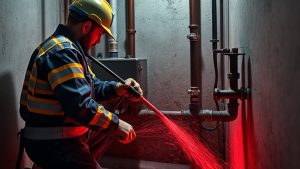
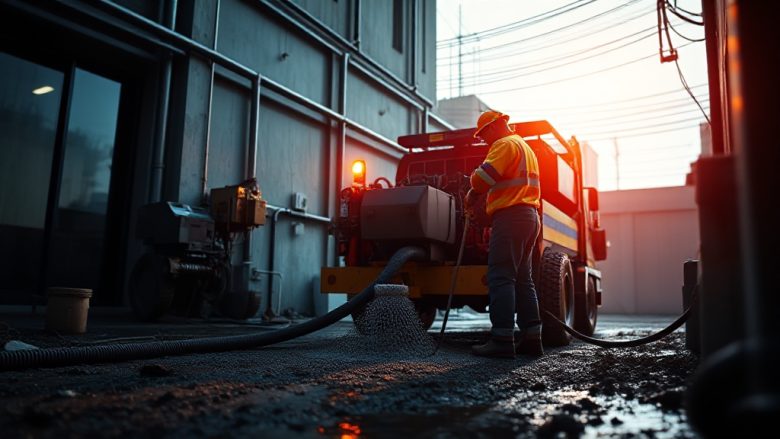
For a residential kitchen line, a rotating cable with a proper head is often enough. For a restaurant grease line or a condominium main, water pressure does the work that a cable cannot. Hydrojetting removes the film on the pipe wall, while a cable only punches a hole through the clog. That difference is why some drains back up again in a week and others stay clear for a year.
The step-by-step sequence I follow
- Confirm the affected fixtures and locate the nearest accessible cleanout.
- Protect the floor and surrounding area, especially in finished apartments and commercial kitchens.
- Run a camera or a visual check where the line allows it, to see direction and condition.
- Clear the obstruction with the matched tool, working from the cleanout toward the main.
- Flush and re-test every fixture on the branch, not only the one that was blocked.
- Report what was found, including any damaged section that will need follow-up.
Steps four and five are where shortcuts show up. A crew that clears one drain and leaves without testing the rest of the branch will often be back within days. When you hire a desentupidora Morumbi São Paulo SP, ask specifically whether the re-test covers all fixtures on the line.
What changes when the blockage is in the main line
Main-line work needs access, and access is the real variable in this neighborhood. Some buildings have cleanouts in the garage or the service area; others have them buried under tiles or behind landscaping. If the cleanout is inaccessible, the first task becomes creating safe access rather than forcing a machine through a fixture. That is also the point where a camera inspection saves money, because it shows whether the obstruction is grease, roots, collapsed pipe or a foreign object.
Foreign objects are more common than people expect: wipes, small toys, and in commercial kitchens, pieces of equipment or packaging. A cable can hook some of these; others must be retrieved. If the tool meets a hard stop that feels different from grease, stop and inspect before forcing it.
Emergency calls after hours and what to expect
Most of my night calls in Morumbi are sewage backups in ground-floor apartments and restaurants that cannot open the next morning without working drains. An emergency service should confirm arrival time, explain the likely method over the phone, and tell you what to shut off before the crew arrives. If a company cannot give you an arrival window, that is a warning sign.
For buildings with septic systems or grease traps, the emergency may not be the drain at all but the tank or trap that has filled. In that case, pumping and cleaning come before any line work. A crew that only carries drain equipment will clear the pipe and leave the actual cause in place.
Cost, time and the trade-offs nobody explains
Pricing for this kind of work depends on access, depth, method and time of day. A simple fixture clearing is a short job; a main-line obstruction with no accessible cleanout can take hours and may require a second visit. The trade-off is always between speed and durability. A quick cable pass gets you through the night; a full hydrojetting and camera check costs more but addresses the cause.
| Method | Best for | Limitation |
|---|---|---|
| Manual plunger | Soft clogs near a trap | No reach into branch or main lines |
| Rotating cable | Local blockages, some roots | Leaves pipe-wall film behind |
| Hydrojetting | Grease, scale, main lines | Needs proper access and pressure control |
| Camera inspection | Diagnosis before and after work | Adds time and cost to the visit |
Ask for the method in writing before work starts. A desentupidora em Morumbi São Paulo SP that explains the plan up front is also more likely to tell you when a cheaper option will do.
Common mistakes that turn one call into three
The most expensive mistake is treating a main-line blockage as a fixture problem. The second is skipping the re-test, which hides a partial obstruction further down the branch. The third is ignoring the warning signs of a damaged pipe: repeated backups in the same spot, slow drainage after every heavy rain, or a persistent smell near a floor drain. Each of these points to condition, not just clogging.
Prevention is unglamorous but effective. Strainers in kitchen sinks, no wipes in toilets, and a periodic hot-water flush of grease lines reduce the frequency of calls. For commercial kitchens, a scheduled grease trap cleaning is cheaper than an emergency shutdown. For condominiums, a preventive camera inspection of the main line every couple of years catches root intrusion before it becomes a flood in the garage.
What to ask before you choose a company
Ask whether the technician carries a camera, what method they plan to use and why, whether the price includes the re-test of all fixtures, and what happens if the obstruction turns out to be a collapsed pipe. Ask for the arrival window in writing. And ask whether they handle septic tanks and grease traps, because a drain-only provider will stop at the pipe and leave the source of the problem untouched.
If the answer to any of these is vague, keep calling. The difference between a crew that clears a drain and one that solves the problem is usually visible in the questions they ask you before they arrive, not in the equipment they unload.
Closing the call: what a good job leaves behind
A finished job should leave you with working fixtures on the whole branch, a clear explanation of what was removed, and a note of any section that needs monitoring. If the crew found roots or a damaged joint, you should know the location and the recommended next step. That record is what turns a single emergency into a maintenance plan, and it is the reason the routine above starts with diagnosis rather than with a tool.
When the plunger fails, the useful next move is not a bigger plunger. It is a structured check of what is backing up, where, and why, followed by the method that matches the pipe. That is the whole discipline behind a reliable desentupidora Morumbi call, and it is what keeps the same drain from calling you back next month.